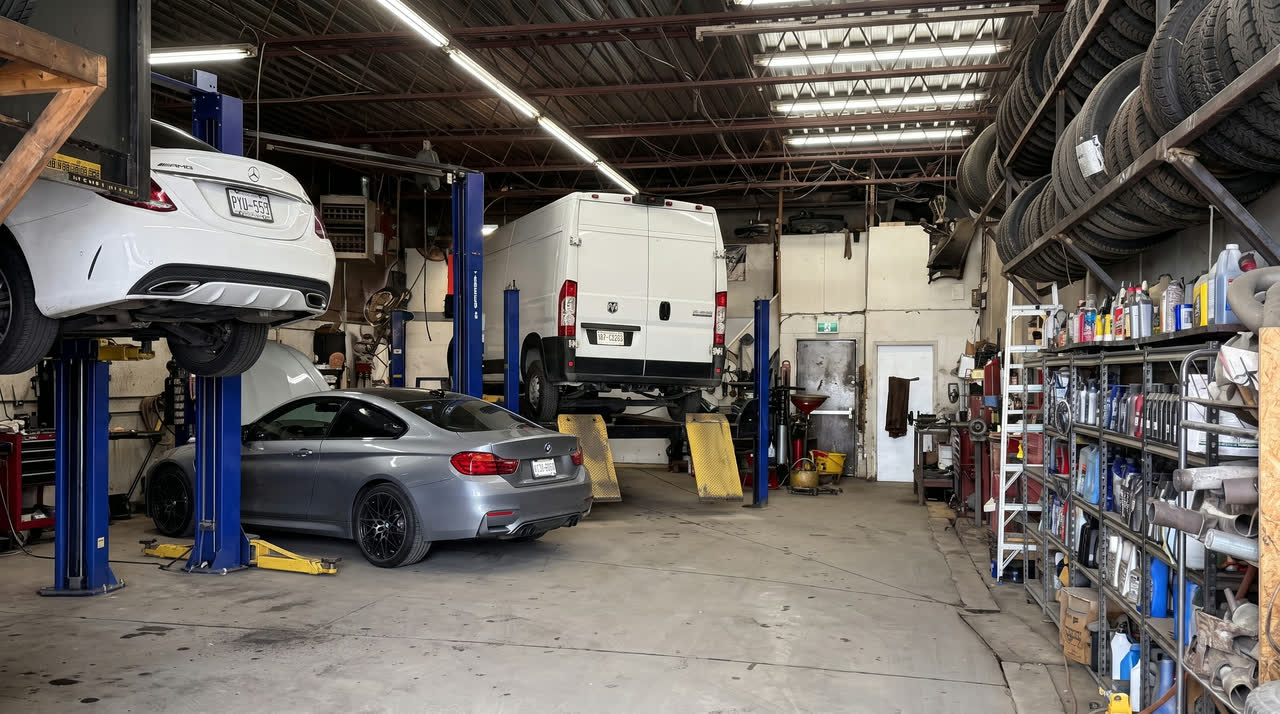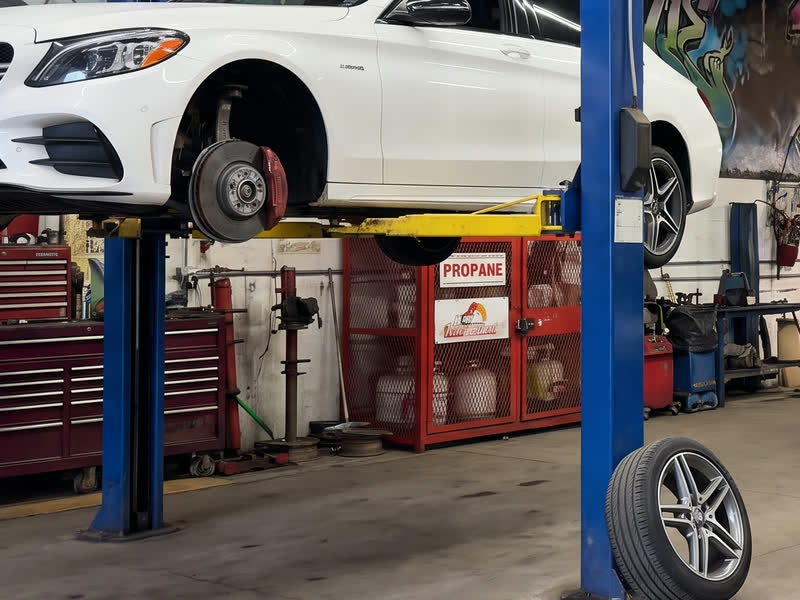
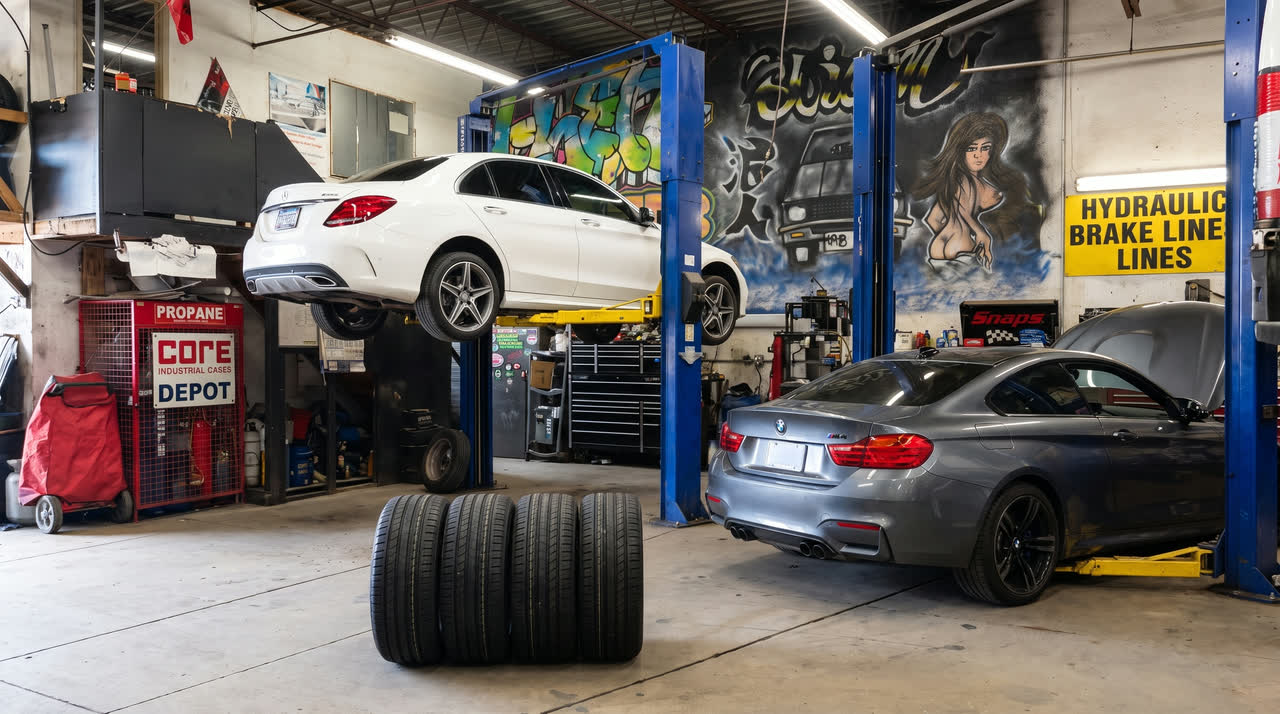
What you might be noticing
A flat that will not hold air, a slow leak you keep topping up, a vibration in the steering wheel once you hit highway speed, or tread that is wearing unevenly across the tire. Sometimes it is simpler than that, your tires are just old, and it is time for the seasonal changeover before the weather turns.
If your car pulls slightly to one side, or you hear a low humming sound that changes with your speed, that is often tire related too, and worth checking before it turns into a bigger repair.
Tire problems tend to escalate in stages. A pinhole leak from a nail often shows up first as a tire that needs air every couple of weeks rather than a sudden flat. Left unaddressed, driving on a low tire generates heat and can damage the sidewall internally, at which point a repairable puncture turns into a tire that has to be replaced. Uneven wear works the same way, a slightly worn edge on one shoulder becomes a noisy, unsafe tire if the underlying alignment or pressure issue is never corrected.
What we rule out first
A vibration at highway speed is not automatically a tire problem. We check tire balance first, since that is the most common cause, but we also look at whether the vibration changes with braking, which would point toward a brake issue instead, or whether it is speed sensitive in a way that suggests an alignment or suspension component. A pull to one side gets the same treatment, checked against tire pressure and wear pattern before we look at alignment.
What you can check yourself
Press a Canadian quarter into the tread with the caribou pointing down. If you can see the top of the caribou’s back, the tread is getting low and it is worth having it looked at. Check pressure when the tires are cold, ideally before driving, using the number on the sticker inside your driver’s door, not the number printed on the tire itself. Walk around the car and look for cracking in the sidewall rubber or any bulge, which can mean internal damage even if the tire still holds air.
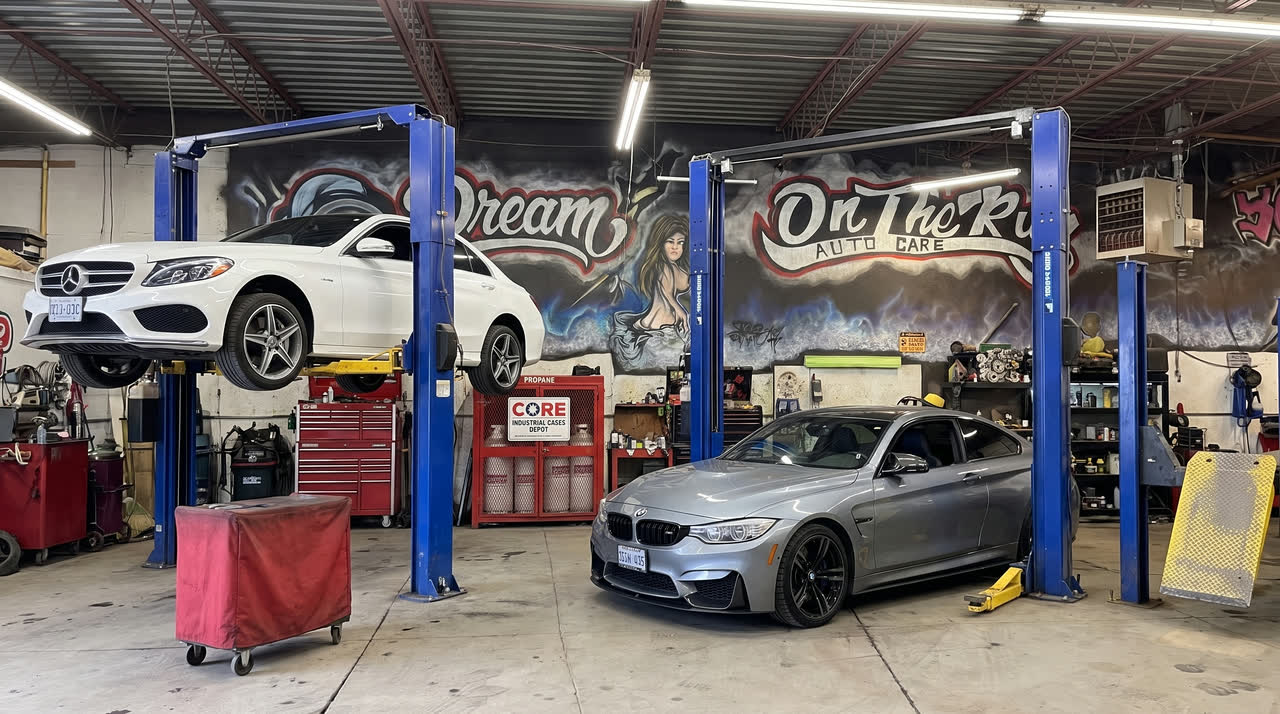
What we actually do
For a puncture, we remove the tire completely from the rim to inspect both the inside and outside, not just look at the surface. That way nothing hidden gets missed. If the damage is repairable, meaning it is in the center of the tread and not on the sidewall, we patch and seal it properly and reinspect before it goes back on your car.
For rotation, we move each tire to a new position, typically front to back and side to side, based on the pattern that suits your specific vehicle. This evens out tread wear so you get more life out of the full set instead of replacing two tires early.
For balancing, we use dedicated equipment to check the weight distribution of each wheel and add small weights where needed to eliminate vibration and improve ride quality.
We handle:
- Flat tire and puncture repair
- Tire rotation
- Wheel balancing
- Seasonal tire changeovers, including storage options
- Tire inspection as part of general maintenance
How long it takes
A single puncture repair usually takes under an hour. Rotation and balancing together are typically done within an hour as well. A full seasonal changeover, swapping all four tires and wheels, is one of our busiest services from October through December, so booking ahead during that window gets you in faster.
What it depends on
Whether a puncture can be repaired depends on its location and size, which we will confirm once the tire is off the rim. Rotation and balancing intervals depend on your vehicle and how you drive, city stop and go wears differently than highway kilometres.
The changeover season is the busiest stretch of the year for every shop in the city, so if you know you will need winter tires on, booking early in the fall gets you ahead of the rush. Ontario offers an insurance discount for running winter tires, while Quebec requires them by law from December 1 to March 15, which matters if you regularly drive into Gatineau or Aylmer.
Related to this
Uneven tire wear is often connected to alignment, our wheel alignment page covers that in more detail. If a vibration turns out not to be your tires, our brake repair page is a common next place to check, and general auto repair covers everything else.
Common questions
Can a punctured tire always be repaired?
A puncture in the center of the tread can usually be repaired if it is small and the tire is otherwise in good shape. Damage along the sidewall, multiple punctures, or a tire that has been driven on while flat generally cannot be repaired safely and needs to be replaced.
How often should tires be rotated?
Manufacturers typically recommend rotating tires every 8,000 to 11,000 kilometres, which keeps wear even across all four and extends how long the set lasts. We can check this against your specific vehicle's schedule when you book a service.
When should I switch to winter tires in Ottawa?
Most Ottawa drivers switch to winter tires in late October or November, before the first real snow and ice, and back to all seasons in the spring. Ontario also offers an insurance discount for running winter tires, which is worth asking your insurer about.
Is winter tire changeover different in Gatineau or Aylmer?
Yes, and it matters. Quebec legally requires winter tires on passenger vehicles from December 1 to March 15 each year. Ontario has no such law, only the insurance incentive, so if you cross the river regularly, plan your changeover around the Quebec deadline.
How do I know if my wheels are out of balance?
A vibration through the steering wheel or the seat at highway speed is the most common sign, along with uneven tread wear in patches. Balancing corrects this with small weights added to the rim.
What can I check on my own tires before booking?
You can check tread depth with a coin, look for cracks in the sidewall, and check tire pressure when the tires are cold. A tire with the tread worn down to the wear bars, or a bulge anywhere on the sidewall, means stop driving on it and get it looked at rather than waiting.
Is a slow leak safe to drive on until I can book an appointment?
A slow leak is generally safe for a short time if you keep the tire properly inflated and check it daily, but it should still be looked at soon. A tire that loses noticeable pressure overnight, or a leak from a sidewall rather than the tread, should be treated as more urgent since a sidewall issue often cannot be repaired at all.