What you might be noticing
The check engine light is on, steady or flashing. The engine idles rough or stalls at stop signs. There’s a knock or a tick under the hood that wasn’t there before. The car feels weak climbing a hill or merging onto the 417 from Innes Road. You smell fuel or burning oil. There’s a fresh spot on the driveway in the morning.
Any one of these is worth checking. Several of them share the same handful of common causes, and the quickest way to the answer is a proper diagnosis, not a guess based on the symptom.
Engine problems usually build. A rough idle that only happens on the first cold start and smooths out once the engine warms up usually gives you more time than one that shows up at every red light. A faint knock that only appears under load, like going up a hill, is one to watch, because that kind of noise tends to get louder and more constant.
What we rule out first
A check engine light doesn’t automatically mean a big engine job. We start with the gas cap and the fuel system, because a loose or worn cap is one of the most common reasons for a stored code. Then we test the sensors the code points at instead of assuming they’re bad, since a corroded connector next to a sensor sets the same code as the sensor itself. Doing it in that order keeps you from paying for a part that was never broken.
What you can check yourself
With the engine cold, pull the dipstick and check the oil level and colour. Look under the car where you park for fresh spots. Then note exactly when the noise or the light shows up, whether that’s a cold start, accelerating, idling, or cruising at highway speed. That narrows things down before we even connect a scan tool.
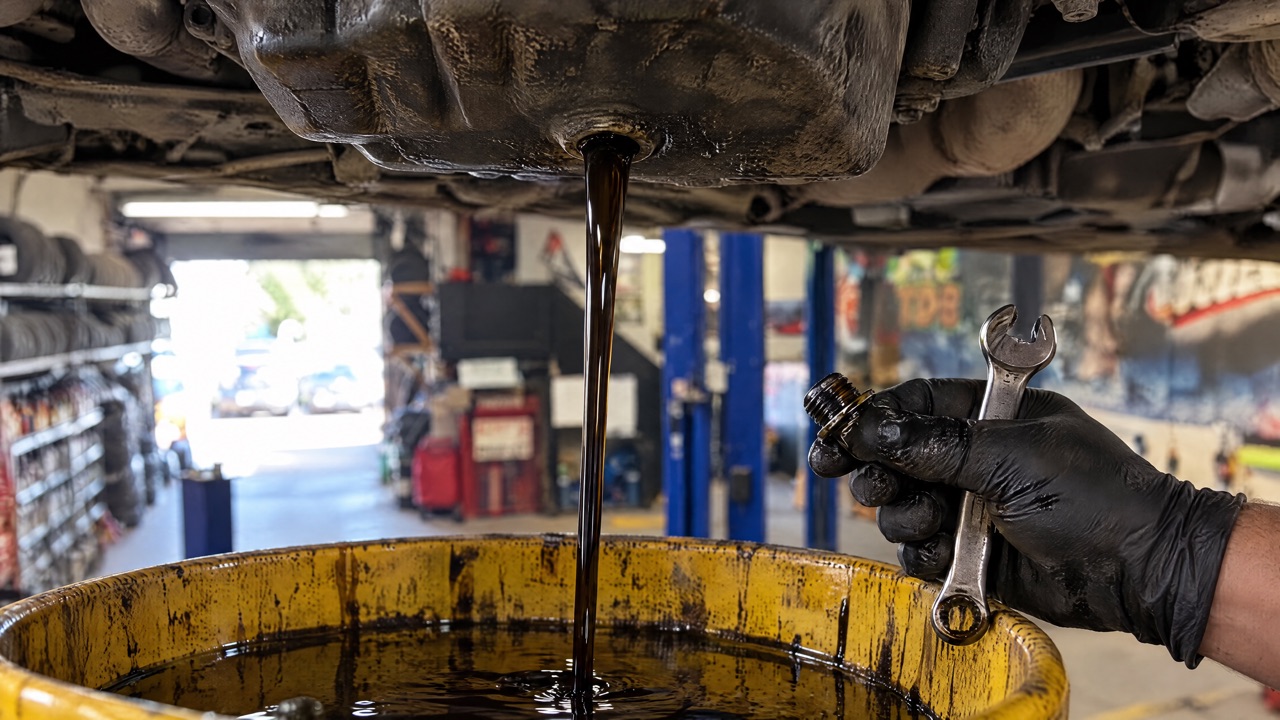
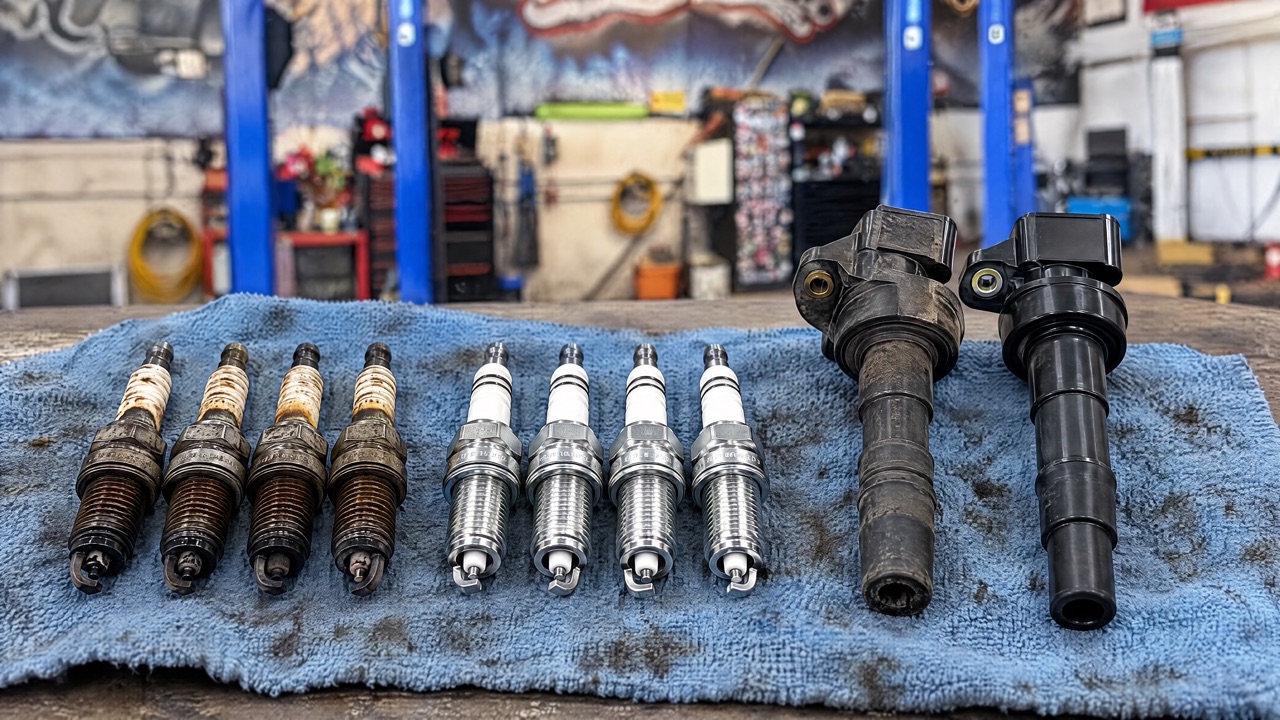
What we actually do
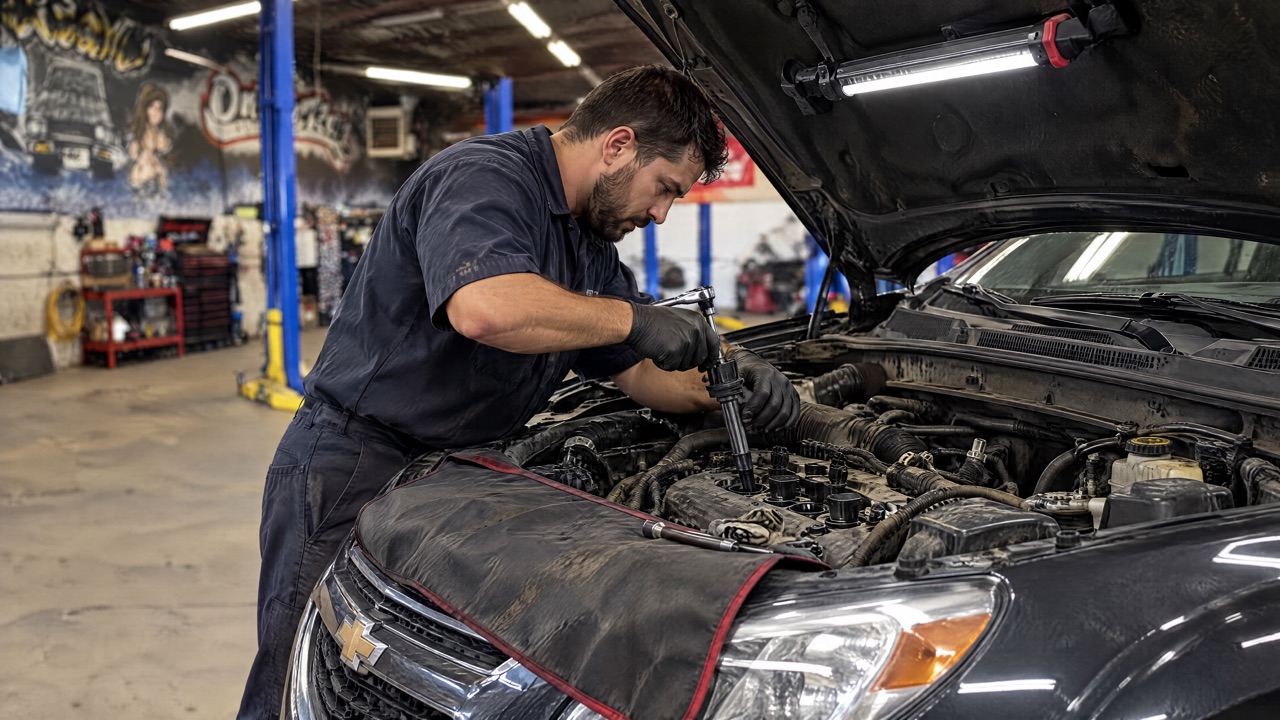
First we connect to the engine computer and pull the stored codes, which tells us what the engine’s own sensors have flagged. Then we confirm the cause with hands on testing, since the first code is rarely the whole story.
- We read and interpret codes with Snap-on, Mac and OTC scan tools
- We check the cheap, common causes first, like a loose gas cap, before assuming something expensive
- We test oxygen sensors and any other sensors the codes flag
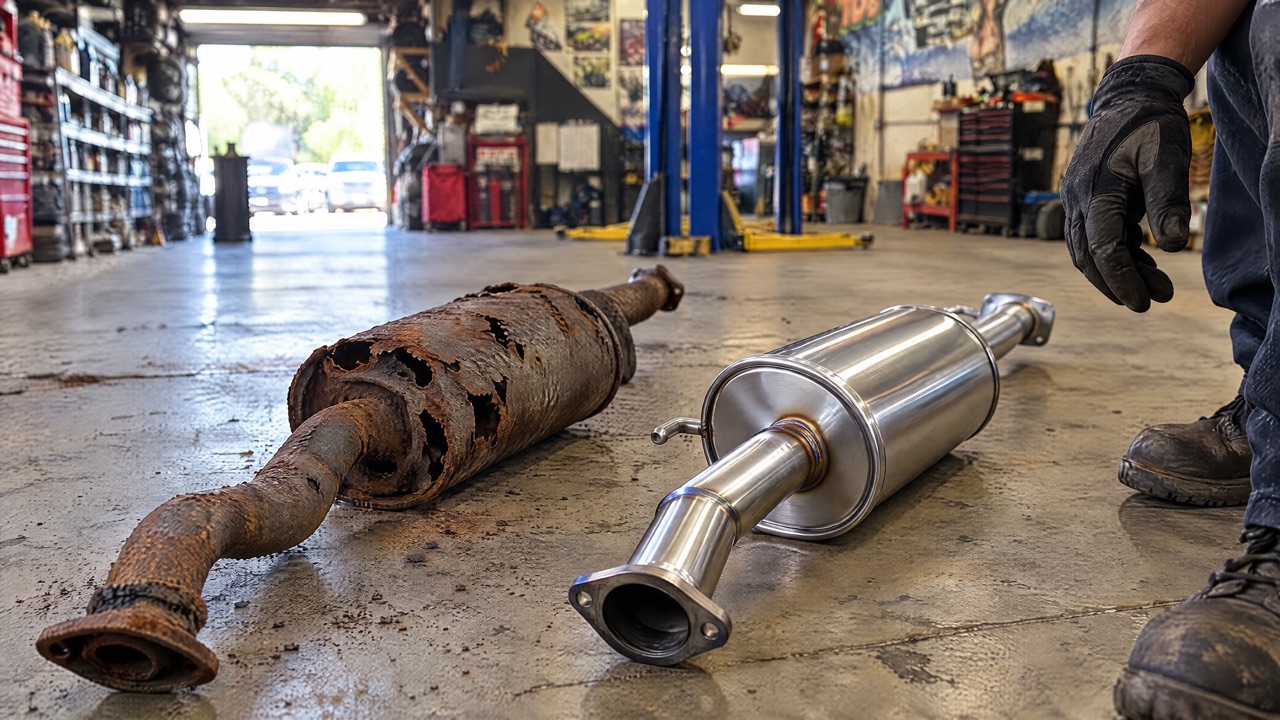
- We check the catalytic converter when the codes or symptoms point at it
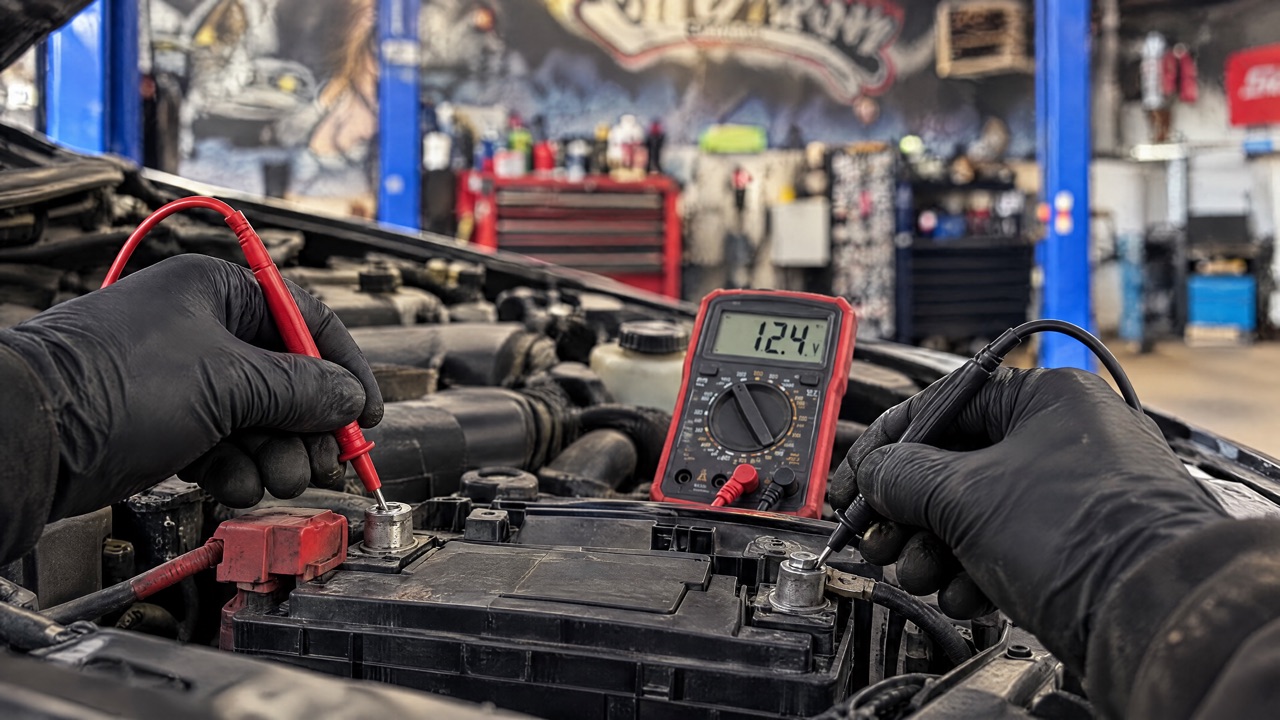
- We test the battery and charging system, since a weak battery can cause running problems that have nothing to do with the engine
- We clean the engine bay when grime is hiding a leak, then trace the leak once we can see it
Then we walk you through what we found and what it means before any repair starts.
Engine cleaning as part of diagnosis
Built up dirt and oil on an engine can hide exactly where a leak is coming from. That slows the diagnosis and lets a small leak go on longer than it should. When it helps, we clean the engine bay before we trace a leak. A clean engine also sheds heat a little better, since caked on grime holds heat against parts that are meant to cool off.
Cleaning won’t fix a mechanical problem. If a noise or a warning light needs a repair, we’ll say so plainly.
How long it takes
Reading codes and a first look usually happen early in the day. Simple fixes, like a sensor or a gas cap, are often done the same day. Bigger engine repairs, or anything waiting on a part, take longer, and we’ll give you a timeline once we know exactly what the car needs. We’d rather tell you it needs two more days than rush it and have the same light come back next week.
When the cause isn’t clear yet, diagnostic time is $110 per hour, and we check in with you as it goes.
What it depends on
Every engine job is different. The time and the scope depend on the make, the age of the car, and how far the problem got before someone caught it. We use OEM or OEM equivalent parts. If your car needs a specialty part, we’ll tell you how long it should take before we order it.
Common questions
How do I know my engine needs work and not just a sensor?
From the driver's seat you often can't. A failing sensor and a real engine problem can turn on the same light. We read the stored codes and then test what they point at, because a code often names a symptom rather than the cause.
Is it safe to keep driving with the check engine light on?
If it's steady and the car drives normally, a short drive to get it checked is usually fine. If it's flashing, stop driving and call. A flashing light usually means a misfire, and that can wreck the catalytic converter.
What causes a rough idle or stalling?
Common causes include a vacuum leak, a dirty or failing sensor, a worn ignition part like a coil or spark plug, or a fuel delivery problem. There are enough possibilities that it's worth diagnosing before replacing anything.
Does engine cleaning actually help engine problems?
Not by itself. Cleaning the engine bay gets rid of built up grime and oil so a leak is easy to see. It won't fix anything mechanical, but it makes finding where the oil is coming from much quicker.
Do you work on all makes and models?
Yes. Domestic and import, all makes and models, with the same diagnostic process.
What can I check myself before booking an engine repair?
With the engine cold, check the oil level and colour on the dipstick and look for fresh spots where you park. Note whether the noise or the light shows up at idle, when accelerating, or only when cold. Don't open a hot radiator cap or reach near the belts with the engine running.