Your check engine light is on. Here is what to do next.
A steady check engine light usually means you can keep driving and should get the car looked at in the next few days. A flashing check engine light means pull over as soon as it is safe, because the engine is misfiring and can ruin the catalytic converter, one of the pricier parts on the car. Check which one you have before you decide anything.
Look at the light first
The most useful thing you can know is whether the light is steady or flashing. Steady means the computer found a problem worth reporting, but not one doing damage this minute. You can usually finish your trip and book a visit for the next few days.
Flashing is different. It usually means the engine is misfiring right now and sending unburned fuel into the exhaust. That fuel can light off inside the catalytic converter and cook it far past what it was built to handle. If your light is flashing, get off the road when it is safe and have the car towed or driven straight to a shop. Not to the grocery store first.
The boring cause: the gas cap
Before you assume the worst, check the gas cap. A cap that is loose, cracked or left on the pump island breaks the seal on the fuel system, and the computer reads that as an evaporative emissions leak. It is one of the most common reasons the light comes on.
Tighten the cap until it clicks. The light may not go out right away. Most cars need a few drive cycles, meaning a few full trips where the engine gets fully warm, before the computer clears the code on its own. If the light is still on after several days of normal driving, something else is wrong.
What a scan tool tells you, and what it does not
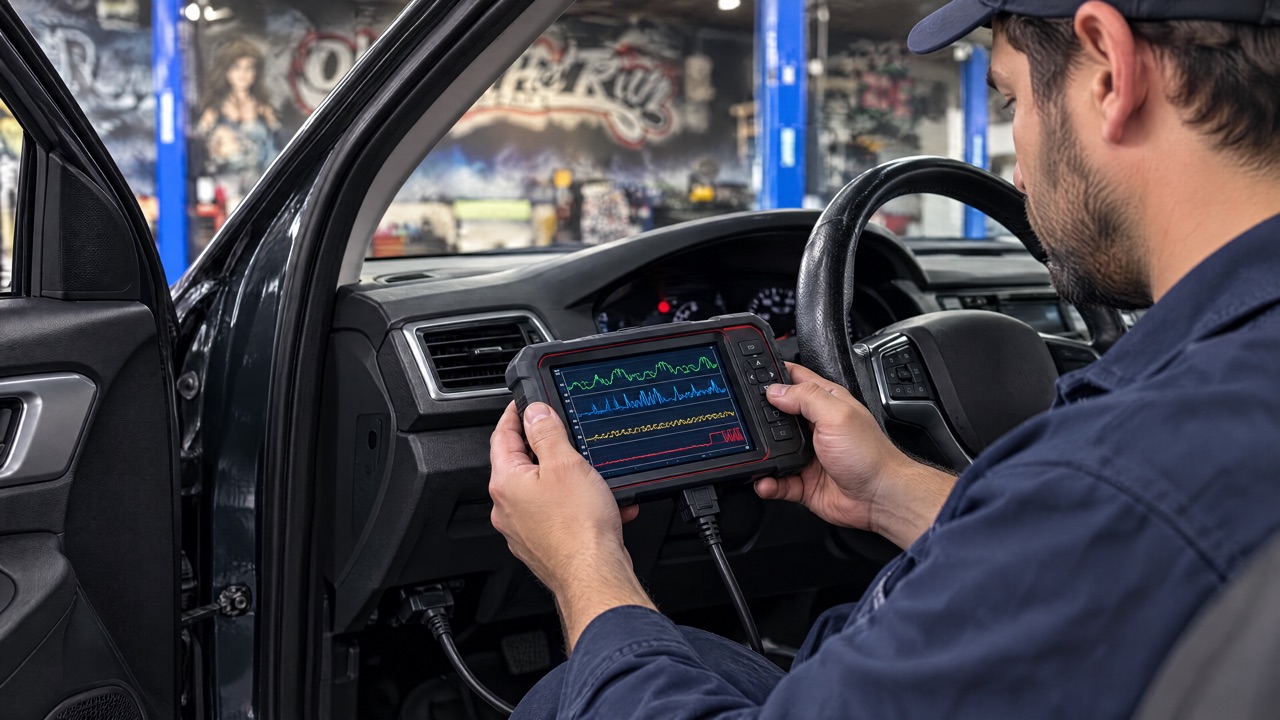
When we plug a scan tool into your car, it pulls a diagnostic trouble code. That is a short code tied to the system that set off the light, like fuel, ignition, or one of the emissions sensors. It points to an area. It does not name the failed part.
This is the part people misunderstand most. A misfire code on one cylinder could come from a worn spark plug, a failing ignition coil, a vacuum leak, a fuel delivery problem, or a sensor giving a bad reading. The code narrows the search. Finding the cause means testing the parts in that system, sometimes with the engine running, until one of them shows itself.
A free code read is a start, not a diagnosis
Plenty of Ottawa drivers get a free code read at a parts store first, and that is a sensible step. It gives you a rough idea of what the light is about and how worried to be.
The catch is that it stops at the code. Buying a part based on the code alone is a gamble, because the code names a system, not the broken piece inside it. We take that same code and test the actual components to confirm which one is at fault. That way you do not pay for a sensor that was never the problem.
Symptoms that raise the urgency
Pay attention to how the car is running, not just the light. Rough idle, hesitation when you press the gas, a clear loss of power, stalling, or a smell of fuel or burning all make it more urgent, even with a steady light. If you notice any of those, treat it like a flashing light and get the car in soon.
Drive Clean is gone
Some drivers still link the check engine light to Ontario’s old mandatory emissions test. Drive Clean testing for light passenger vehicles ended in 2019. The light is now about your car’s health and nothing else.
Other warning lights can be worse
The check engine light is not the only one to take seriously. An oil pressure light, a temperature warning or a battery light each mean something different, and low oil pressure or overheating can wreck an engine in minutes, not days. If one of those comes on, with or without the check engine light, pull over when it is safe and shut the engine off.
Most cars also flash the check engine light for a few seconds when you start them, as a bulb check. That is normal. What this article is about is a light that comes on while you are driving and stays on.
What happens at the shop
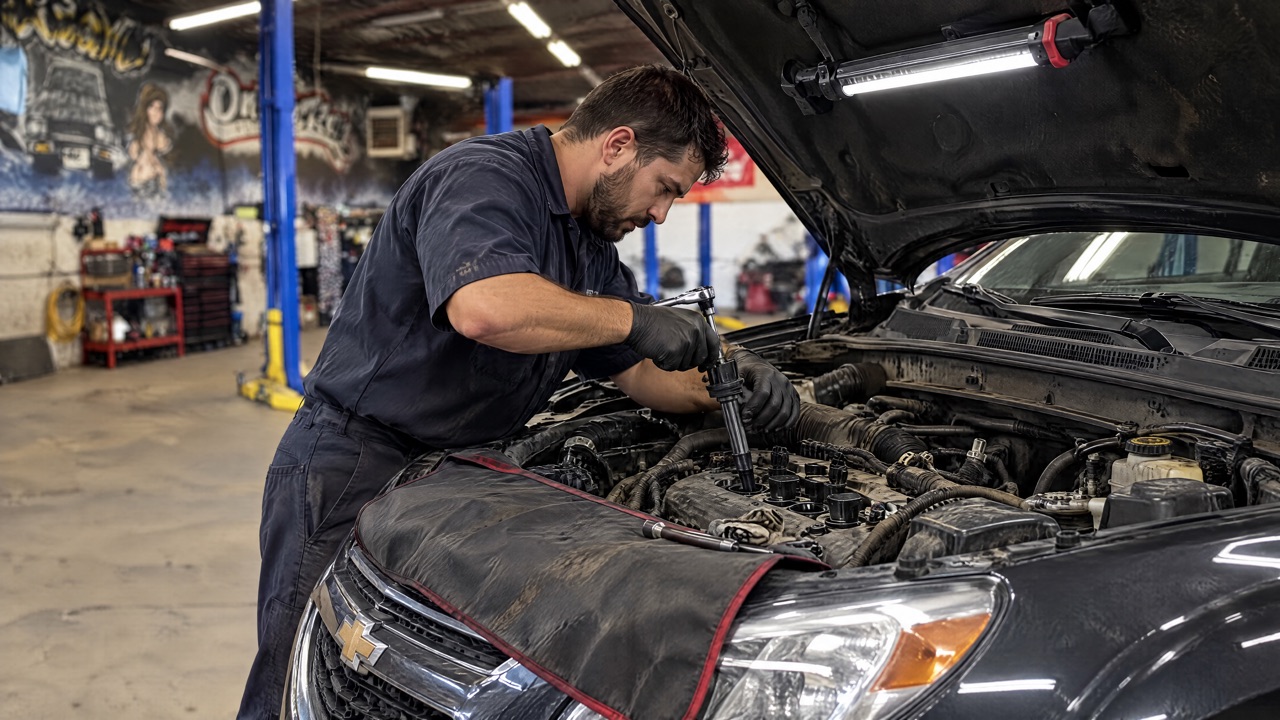
The scan tool comes first, because the code tells us which system to start with. After that it depends on the code. A misfire might mean pulling a spark plug to look at it, testing an ignition coil under load, or checking fuel pressure. An emissions code might mean testing the evaporative system for leaks somewhere other than the gas cap.
When the cause is unknown, diagnostic time at our shop is $110 an hour. We tell you that up front and call you before going further. Tell us every symptom you have noticed, even small ones like a slight stumble or a smell you cannot place. It narrows things down faster and keeps you from paying for parts that were never the problem.
When you book online, you can attach up to four photos. A clear shot of the dashboard with the light on, and any other lights that came with it, saves us time.
Get it looked at
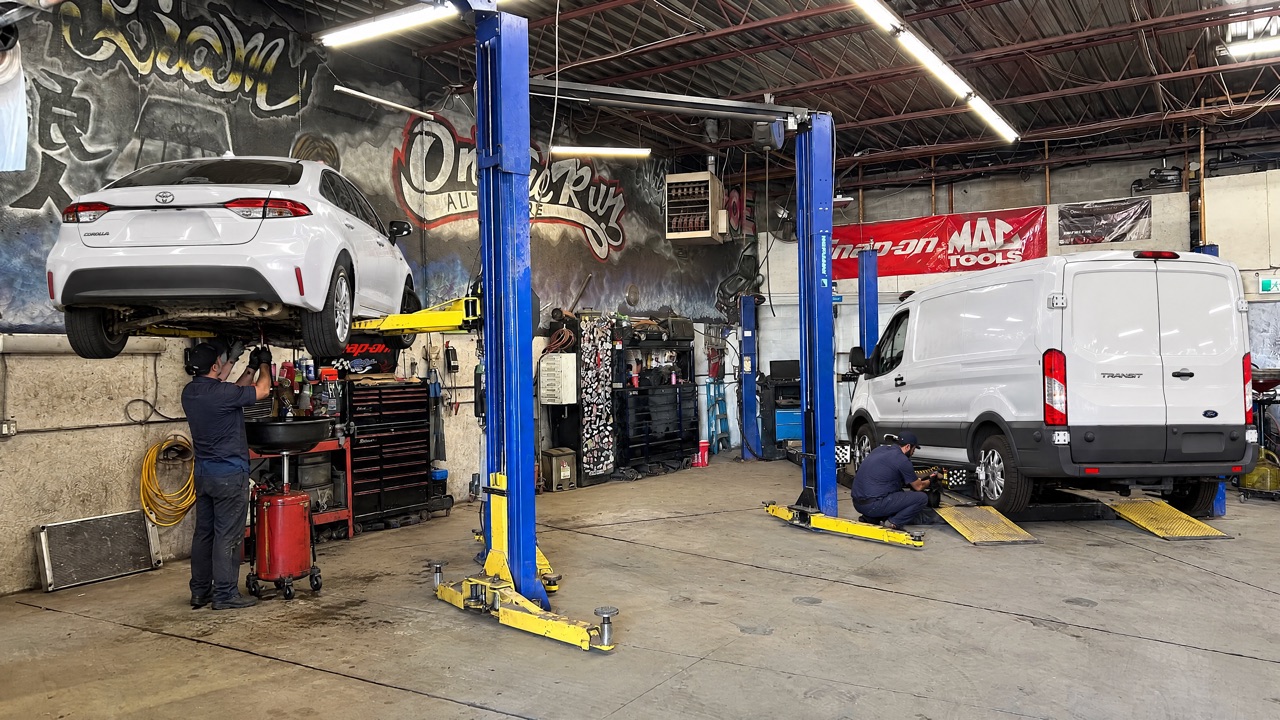
If your check engine light is on, steady or flashing, call (613) 321-7342 or book online at any hour. We run car diagnostics with Snap-on, Mac and OTC scan tools to find the actual cause, and we do the engine repair that often follows. On The Run Auto Care is at 2535 Blackwell Street, Suite 12, off Innes Road in east end Ottawa, and we see drivers from Gatineau and Aylmer too.
Common questions
Is it safe to keep driving with the check engine light on?
If the light is steady and the car runs normally, with no rough idle, stalling or burning smell, it is usually fine to drive it to a shop within a few days. If the light is flashing, pull over as soon as it is safe.
What does it mean if the check engine light is flashing?
It almost always means the engine is misfiring right now, so unburned fuel is going into the exhaust. That fuel can overheat the catalytic converter and destroy it. Get the car off the road and have it towed or looked at instead of driving on.
Can a loose gas cap really cause the check engine light?
Yes, it is one of the most common causes. A loose, cracked or missing cap breaks the seal on the fuel system, and the computer logs it as an evaporative emissions leak. Tightening the cap often fixes it, but the light can take a few days of normal driving to go out.
I got a code read at a parts store. Why do I still need a shop?
The code tells you which system set off the light, not which part failed. A misfire code could mean spark plugs, an ignition coil, a fuel problem or something else. A shop uses the code as a starting point and tests the parts to find the real cause.
Does Ontario still require an emissions test for the check engine light?
No. Ontario ended Drive Clean emissions testing for light passenger vehicles in 2019. A check engine light today is about the health of your car, not a government test.
Book it, or just call and ask
If you are not sure which service you need, describe what the car is doing and we will tell you what it needs looking at.