Road salt and rust: what Ottawa winters do underneath your car
Road salt attacks brake lines, fuel lines, and exhaust components first, then works into the subframe and rocker panels over years of exposure. An underbody wash through the winter and a spring rinse once the salt trucks stop running are the two habits that slow it down the most. Rust becomes a safety issue, not just a cosmetic one, once it reaches structural parts like brake lines or the subframe.
Salt goes after thin metal first
Ottawa runs a heavy salting program on its roads every winter, and that salt does not stay on the surface. It sprays up into the underside of every car that drives through it, settles into every gap and seam, and sits there until it is washed away or it does its work.
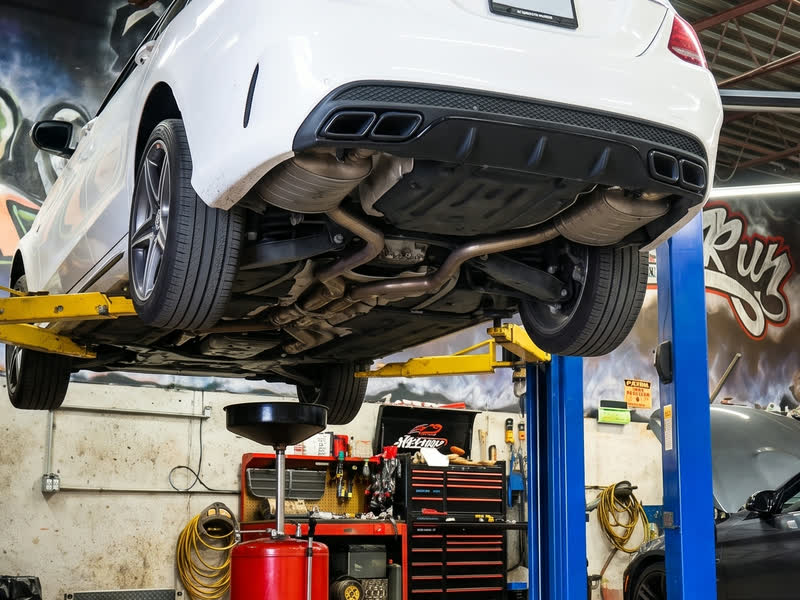
The order of what gets attacked first comes down to metal thickness and exposure. Brake lines are thin steel tubing running the length of the car, fully exposed to the underside spray, and they are one of the earliest and most serious points of corrosion. Fuel lines face the same exposure and the same thin gauge metal. Exhaust components, particularly the muffler and the pipes leading to it, sit low and are constantly wet with road spray through a salted winter, which is why exhaust systems often show visible rust before much else does.
After those, salt works its way into the subframe, the structural frame that holds the suspension and steering in position, and the rocker panels, the body sections running along the bottom edge of the car doors. These are heavier metal and take longer to show real damage, but because they are structural, the damage matters more when it does happen.
Why an underbody wash matters, and when to do it
Salt causes the most damage while it is wet and in direct contact with metal, which is exactly the condition it is in for most of an Ottawa winter. Rinsing the underside of the car, ideally at a car wash with an undercarriage setting, interrupts that contact and reduces how long the salt sits against your brake lines, fuel lines, and exhaust.
The most useful time to do this is periodically through the winter itself, not just once in spring. A single spring rinse after the salt trucks stop running for the season helps, but it comes after months of exposure already happened. Rinsing every few weeks through the winter, especially after a big salting event following a snowfall, does more to actually slow the corrosion while it is happening.
Rust proofing, two different products
People often use "rust proofing" as one term, but there are genuinely two different products with different tradeoffs, and it is worth understanding the difference before choosing one.
Annual oil based spray is applied to the underside of the car and works by displacing moisture and coating exposed metal in a protective film. It needs to be reapplied roughly once a year, usually in the fall before winter driving starts, because the coating wears and washes off over time. The tradeoff is ongoing yearly cost against a treatment that is renewed and refreshed each season.
Permanent coatings are applied once, typically when a car is newer, and are meant to last for the vehicle’s life without reapplication. The tradeoff runs the other way, a larger upfront cost or a one time application against no yearly maintenance.
Neither one is simply the better choice, they suit different situations and different budgets. .
When rust stops being cosmetic
Surface rust on a body panel, a rusty look along a wheel well, or bubbling paint are mostly cosmetic concerns. They are worth addressing before they spread, but they are not putting you at risk on the road.
Rust becomes a safety issue once it reaches structural or functional parts. A corroded brake line can develop a pinhole leak, which lets brake fluid escape and reduces or eliminates braking power to that wheel, sometimes without much warning before it fails. A badly corroded subframe compromises the structure that holds your suspension and steering geometry in place, which affects how the car handles and how safely it absorbs an impact. If you notice a soft or spongy brake pedal, a puddle of fluid under the car, or visible heavy corrosion on the underside, those need attention immediately rather than at your next scheduled service.
Why Ottawa’s salt use is different from a lot of cities
Ottawa gets real winters, and the city runs a heavy salting program across its roads to keep them passable through repeated snow and ice events, often from November through into April. Cars here are exposed to far more cumulative salt over a winter than a car in a milder climate would ever see, which is part of why rust is such a consistent topic among Ottawa drivers in a way it simply is not in other parts of the country.
The exposure also compounds. A single salted drive is not the problem, it is months of repeated exposure, wet and dry cycles, and slush thrown up into the same wheel wells and undercarriage areas trip after trip, all winter long. That is the pattern that eventually wears through protective coatings and starts real corrosion on parts that were fine the year before.
Watching for early signs before they become expensive
A light coating of surface rust on an exhaust pipe or a wheel well lip is common on an Ottawa car after a few winters and is mostly cosmetic at that stage. What is worth flagging early is anything beyond surface discoloration, flaking metal, a rough or crumbly texture when you look closely at a brake line or exhaust hanger, or a part that visibly looks thinner or more corroded than the metal around it. Catching that kind of wear early, before it becomes a functional failure, is usually a much smaller repair than waiting until a part fails outright.
Get the underside checked
If it has been a while since anyone looked underneath your car, or you are noticing a soft brake pedal or a rough sounding exhaust, get it checked before it becomes a bigger repair. Call (613) 321-7342 or book online for a brake inspection or exhaust check. On The Run Auto Care is at 2535 Blackwell Street, Suite 12, serving Ottawa, Gatineau, and Aylmer.
Common questions
What does road salt actually damage on my car first?
Salt attacks thin metal components before it gets to the heavier structural parts. Brake lines, fuel lines, and exhaust components tend to show corrosion first, since they are made of thinner metal and sit directly in the spray coming off the road. Heavier structural parts like the subframe and rocker panels take longer to corrode but are more serious when they do.
Does an underbody wash actually help?
Yes. Salt does the most damage while it stays wet and in contact with metal, so rinsing the underside of the car after driving on salted roads reduces how long the salt sits against those parts. It will not stop rust entirely, but it slows it down meaningfully over a winter of regular driving.
What is the difference between rust proofing spray and a permanent coating?
An annual oil based rust proofing spray is reapplied every year and works by displacing moisture and coating exposed metal, but it wears off and needs a fresh application each fall. A permanent coating is applied once and is meant to last the life of the vehicle, but it is a different product with a different application process and cost. Neither is objectively better, they are different tradeoffs between yearly upkeep and upfront cost.
When does rust become dangerous rather than just cosmetic?
Rust on body panels or a rusty look on the surface is mostly cosmetic. It becomes a safety issue once corrosion reaches structural parts, particularly brake lines, which can develop pinhole leaks that affect braking, or the subframe, which holds the suspension and steering components in place. Those need immediate attention, not just cosmetic repair.
Is there anything I can do myself between shop visits?
A simple rinse of the underside of your car with a garden hose after a salty drive, especially at a self serve car wash with an undercarriage setting, helps between more thorough services. It is not a replacement for a proper rust proofing treatment, but it is a free habit that adds up over a winter.
Book it, or just call and ask
If you are not sure which service you need, describe what the car is doing and we will tell you what it needs looking at.